
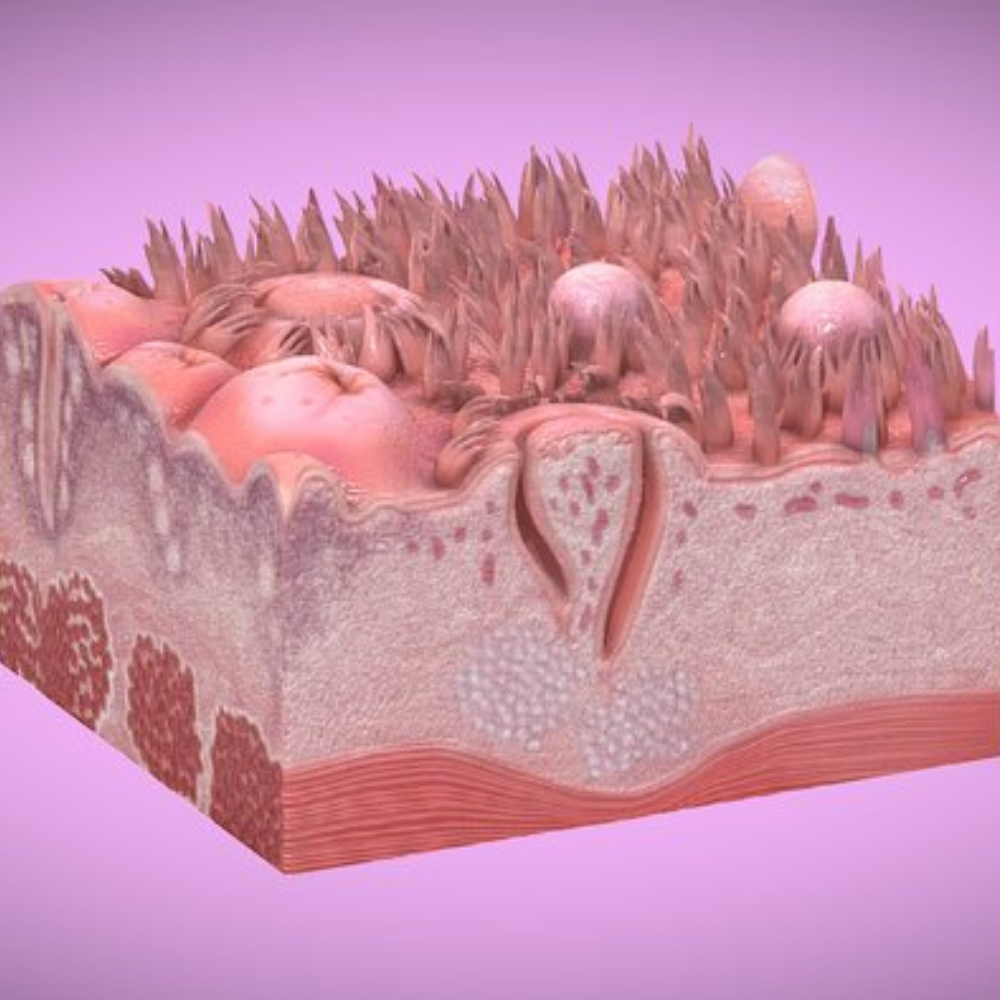
Histopathology
What is Histopathology?
The literal meaning of histopathology is ‘the pathology of tissues.’ It involves establishing the relationship between the signs seen in various diseases or physiological changes and the alterations in tissues. Over time, this has become more than just the sole function of histopathology, which we will discuss later. First, let me explain with an example. Suppose a patient’s lymph node has swollen, accompanied by fever for nearly two weeks and some cough. In the context of Bangladesh, any doctor would first consider tuberculosis (TB). However, to confirm whether it is really TB, several tests are necessary. Routine blood tests and chest X-rays may give some clues, the Mantoux test may provide partial evidence, and if sputum is produced with the cough, the TB bacteria can be detected there. But to fully understand why the lymph node has swollen, histopathology is indispensable. In this case, the treating doctor will remove the swollen lymph node and send it to another doctor, the histopathologist. The histopathologist examines the lymph node under a microscope and reports the actual condition. It might not be TB; it could be lymphoma (a type of cancer). This completely changes the course of treatment—from stopping TB therapy immediately to starting lymphoma treatment.
The example given here is somewhat simplified for easier understanding. The reality is more complex. Let’s look at where simplifications were made so we can better understand how histopathology really works.
Honestly, if TB symptoms are very obvious and the bacteria are found in the sputum, there is no need to visit a histopathologist. But often, TB symptoms are not so clear, or the bacteria are hard to detect. In reality, very few diseases manifest exactly as described in textbooks. Medical texts provide an ‘ideal’ description based on hundreds or thousands of patients, but no individual case matches the description exactly. In such cases, a doctor considers several possibilities—two, three, or five diseases that the patient might have. To determine the exact disease, laboratory tests are necessary. Often, some common tests can help identify the disease. Although a test may not provide 100% certainty, combined with symptoms, the test results offer enough confidence. For example, the Mantoux test is not fully reliable, but if TB symptoms are clear, treatment can be started based on this test alone, and a histopathologist’s opinion may not be required at that point. However, sometimes even specialists cannot pinpoint the disease, and routine tests do not give enough information to confidently start treatment. This is not due to incompetence but the variability of nature. In such cases, when tissue examination is likely to resolve the diagnosis, a histopathologist is consulted. Therefore, a histopathologist is called the ‘consultant of consultants.’
Patients directly visit specialists in medicine, surgery, or gynecology, but a histopathologist’s clients are these specialist doctors because they send the patient’s tissue samples to the histopathologist only when they need expert opinion. Thus, a histopathologist must have comprehensive knowledge of almost all diseases in medicine, surgery, and gynecology because they are accountable to the specialist doctors who send samples for testing. Hence, when sending samples, all patient history, previous test reports, and treatment details must be included. A histopathologist begins diagnosing where others have stopped. Knowing the previous information is crucial for accurate diagnosis. It is not that the histopathologist will become biased with prior reports or history; rather, without this information, the patient’s suffering may increase. The patient goes to the doctor’s chamber, but the histopathologist receives only a piece of the patient’s tissue! Some doctors believe that under the microscope, all diseases become clear as if illuminated by a Philips lamp, but the reality is different. Quality histopathology textbooks state that if a histopathologist does not receive the full details of the patient’s disease and treatment, they have the right to withhold the report or even refuse to accept the tissue sample.
In Bangladesh, the responsibilities of histopathologists are mostly limited to laboratory and classroom settings. However, this is not the case abroad. There, the role of histopathologists extends beyond diagnosis and teaching or research. They also serve as medical experts in forensic investigations, conducting medicolegal autopsies, and perform medical autopsies in hospitals to investigate causes of death and detect any medical negligence. Histopathologists provide expert opinions in clinical audits to ensure healthcare providers’ accountability. In short, the role of histopathologists has expanded from mere diagnosticians to quality controllers in healthcare. Even if we focus only on diagnosis, expectations from histopathologists are increasing. In advanced countries, when a consultant seeks a histopathologist’s opinion about a patient, they expect not just the diagnosis but a detailed classification of the disease, prognosis, and the best individualized or targeted treatment plan. In other words, histopathology is no longer only a paraclinical field but a clinical one because histopathologists also guide which treatment is best for which patient. Due to this expanded role, many subspecialties have emerged worldwide, such as dermatopathology, neuropathology, forensic pathology, etc. Even in our country, hematology used to be an allied subject of histopathology a few decades ago but now has become a distinct clinical specialty.
Want to become a histopathologist? That’s great because although this profession is quite challenging, it allows enough time to spend with family and participate in research or other activities, which is difficult in many other medical specialties. In Bangladesh, two postgraduate degrees are available: MD and FCPS. Obtaining at least one is essential to become a histopathologist. Currently, the MD degree is offered by Bangabandhu Sheikh Mujib Medical University. Although it is a postgraduate degree in pathology, due to historical reasons, it is still called MD in Pathology, though it ideally should be MD in Histopathology. The MD in Pathology residency lasts four years, focusing mainly on training histopathologists but also includes clinical pathology, microbiology, virology, immunology, biochemistry, hematology, transfusion medicine, and more as non-major subjects. The FCPS degree, awarded by BCPS, is known as FCPS in Histopathology and has a curriculum similar to the residency course. Degrees obtained in histopathology in Bangladesh are more or less recognized in India, Nepal, Bhutan, Pakistan, Malaysia, Singapore, and Middle Eastern countries, where histopathologists are also in demand. However, one of the most globally recognized qualifications is the FRCPath, awarded by the Royal College of Pathologists in the UK, with a pass rate of about eighty percent! Unfortunately, no part of the FRCPath exam can be taken from Bangladesh. Some may choose not to pursue FRCPath in histopathology but instead obtain a degree in a subspecialty (such as those mentioned earlier). It is worth mentioning that internationally, the field of histopathology is also known by names such as Surgical Pathology and Anatomic Pathology.

Late Suresh Chandra Saha
Founder of J D PATHOLOGICAL LABORATORY CLINIC

J D PATHOLOGY & CT SCAN CENTER
It has earned a strong reputation since its inception by ensuring accurate healthcare services.
| Saturday: 8 AM to 10 PM |
| Sunday: 8 AM to 10 PM |
| Monday: 8 AM to 10 PM |
| Tuesday: 8 AM to 10 PM |
| Wednesday: 8 AM to 10 PM |
| Thursday: 8 AM to 10 PM |
| Fridayday: 7 AM to 10 PM |